Raleigh, NC—Instead of listening to a bunch of political consultants tell me what Moral Monday is suppose to mean, I decided to attend every protest during the “short session” of the North Carolina General Assembly. Yep, every single Moral Monday.
Armed with a HD camcorder, a smartphone, a tape recorder and a ragged notebook (with a bag of Sharpie’s), I asked a total of 118 protesters one question: why are you here today? Some of their answers amazed me. A few of their stories left me in tears. But, all of the people I spoke with put a smile on my face and a feeling of hopefulness knowing that there are an awful lot of good people left in this world.
At the end of every Moral Monday rally, protesters would follow Rev. Dr. William Barber into the Legislative Building (if the doors were unlocked). If you were one of those protesters who went into the General Assembly you probably saw my face from time to time. I was the short, dumpy, white guy who shadowed Dr. Barber from the front door to the third floor—and everywhere else in between.
Here are some of the totals:
I talked to a total of 118 people asking them one or more questions. Over 8 hours of HD raw footage, almost 4 hours of audio and 617 pictures.
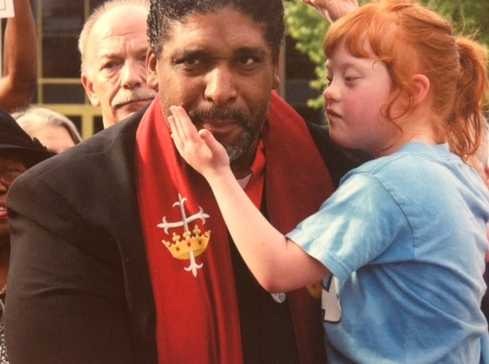 I learned that, at the end of the day, we all want pretty much the same things. We want to be able to put a roof over our heads, provide for our families, raise our kids, live in safety and take care of our health.
Why They Protest:
From all corners of North Carolina, people come together because they feel this GOP led General Assembly doesn’t care about them.
“If I was a corporation, I’d get to the front of the line,” said one protester at a Moral Monday rally in June. “But, I’m not a corporation, I’m just one person. And, to them I don’t count.”
Rev. Dr. William Barber, II said it this way toward the end of the summer “short” session of the NCGA, “This is not a game, these people aren’t getting arrested for fun.”
Arrests:
Rubie Harris, from Greenville, was one of the Tillis 15: a group of protesters who staged a sit-in in House Speaker Thom Tillis’ office. I spoke with Rubie over a two week period and like many at Moral Mondays, she has a tragic story to tell.
https://www.facebook.com/photo.php?v=1428729594057557&l=155479727050393872
The conservative response to arrests:
Some conservatives have argued that the arrests have taken away from the Moral Monday movement and has not added to it. They say it’s ridiculous to face criminal charges when you’re not getting anything accomplished because GOP leaders aren’t going to meet with them or change their ideology.
Arrested protesters disagree. Many protesters have said that elected Democrats don’t have the votes to stop the NC GOP from doing anything, right now. The think their only recourse is to get media attention by staging sit-ins and protests risking arrests. The added media attention slows down the GOP process and puts pressure on them to curb some of their hurtful agenda.
That “hurtful” agenda includes issues like a lack of Medicaid expansion where over 400,000 poor in NC still don’t qualify for health insurance, low teacher pay less than the national average, fracking and making it a criminal offense to disclose the chemicals used in the fracking process, repeal of the racial justice act and voter suppression such as the voter ID law that goes into effect 2016.
As Rubie Harris told me, “if it can happen to me, it can happen to anybody—including them and their family.”
Hypocrisy v. Democracy
Protesters claim that it’s hypocritical to pass legislation that hurts the poor, the elderly and the disadvantaged. “We believe in tax cuts, but tax cuts for the poor, the old and for communities that need it—not for corporations and people like Art Pope who just want more”—said Rev. Barber at a Moral Monday rally.
Protesters site the fact that corporations and the wealthy in NC now have more tax breaks while the NCGOP has systematically passed legislation increasing the taxes of 80% of the North Carolina working class.
A good “take away” on what this movement is trying to fight is evident in one of the last raw footage clips I took. “This is what democracy looks like.”
 Geo Fish